


When fluid temperatures exceed 150°C, a standard centrifugal pump is not enough. You need a cooling system built into the pump itself. The two main options are air-cooled pumps and water-cooled pumps – and the choice between them shapes your operating cost, maintenance workload, and long-term system reliability.
MRP Pumps and Seals, based in Ahmedabad, manufactures both types for industries ranging from thermic fluid heaters and chemical plants to refineries and IBR boiler systems across India.
This guide explains how each technology works, where each performs best, and how to choose the right one for your specific process.
Key Takeaways
- Air cooled pumps use ambient airflow – no cooling water supply is needed – and handle fluids up to 350°C.
- Water cooled pumps use a water jacket to remove heat and suit heavy, continuous-duty systems.
- Air cooled pumps are best for thermic fluid heater circuits, remote sites, and plants without water infrastructure.
- Water cooled pumps are preferred in refineries, IBR boiler systems, and petrochemical plants with on-site cooling utilities.
- The right choice depends on ambient temperature, heat load, duty cycle, and water availability – not purchase price alone.
- Both types work alongside other process equipment; selecting the right combination matters as much as selecting the right pump.
What is an Air-Cooled Pump?
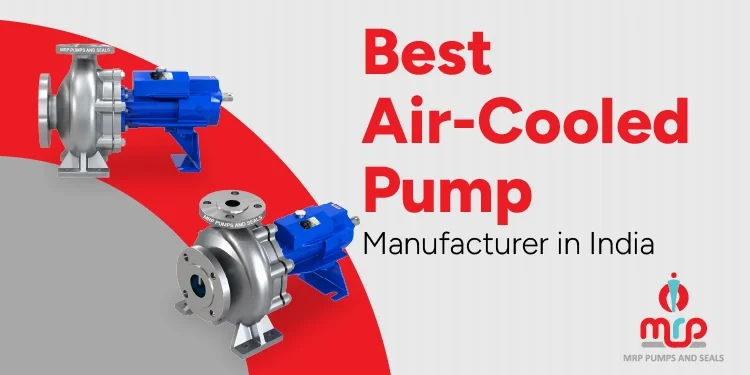
An air-cooled pump handles high-temperature fluids without any external cooling water. Most designs use a canned motor with an integrated heat exchanger. An auxiliary impeller circulates process fluid through the exchanger, and ambient airflow dissipates against the heat. This keeps the motor and seal areas within safe limits – no water supply, no cooling tower, no dedicated pipework.
Air cooled pumps are rated for fluid temperatures up to 350°C. They are the standard choice in thermic fluid heater loops, hot oil systems, and temperature-sensitive chemical circuits where water contact with the process fluid is unacceptable.
What is a Water-Cooled Pump?
A water-cooled pump – also called a thermal hot oil pump or water-jacketed pump – uses a closed water jacket around the stuffing box or bearing housing. Cooling water circulates through this jacket and carries heat away from critical components continuously.
These pumps suit plants where cooling water is already available and where the thermal load is high enough that air alone cannot maintain safe operating temperatures. They are widely used in IBR boiler systems, oil refineries, and large-scale petrochemical plants.
How Do the Two Cooling Methods Handle Heat Differently?
Both pump types solve the same problem: protecting mechanical components from heat damage while pumping hot process fluids. But they take different approaches.
Air-cooled pumps rely on heat transfer through fins, fan-assisted airflow, and internal fluid recirculation. They work well when ambient temperature stays below approximately 45°C. In enclosed spaces or very hot climates, their cooling efficiency decreases.
Water cooled pumps use water’s superior thermal capacity to absorb more heat per unit volume. This makes them more effective under sustained, high-duty thermal loads. However, they depend on a continuous and clean water supply. Poor water quality causes scaling inside the jacket, reducing heat transfer over time, and increasing maintenance frequency.
Air Cooled Pump vs Water Cooled Pump: Comparison
Feature | Air Cooled Pump | Water Cooled Pump |
Cooling medium | Ambient air | Circulating water |
Max fluid temperature | Up to 350°C | Up to 350°C+ |
External utility needed | No | Yes – water supply + drain |
Operating cost | Lower | Higher (water + treatment cost) |
Maintenance complexity | Lower | Higher – scaling, fouling risk |
Risk if utility fails | None | Seal and bearing failure risk |
Suitable ambient temperature | Up to ~45°C | Flexible |
Installation footprint | Compact | Larger – water piping required |
Best applications | Thermic fluid, remote plants | Refineries, IBR boilers, heavy duty |
Capital cost | Moderate | Moderate to high |
Which Industries Use Air Cooled Pumps?
Air cooled pumps are the default choice wherever cooling water infrastructure is absent or where thermic fluid is the primary heat transfer medium.
- Thermic fluid heater systems – are the largest application. Heating loops in plywood, laminate, paper, and textile plants typically run at 200°C-300°C. An air-cooled pump keeps these loops running without a cooling tower or dedicated water supply line.
- Chemical plants – use air-cooled units when fluid compatibility with cooling water is a concern – particularly in systems handling reactive or hazardous chemicals where any water ingress poses a process or safety risk.
- Sugar manufacturing – juice transfer and evaporation circuits operate at elevated temperatures. Air cooled designs eliminate water supply dependency at multiple points in the process loop.
- Fertilizer plants and salt processing – corrosive hot fluids are handled without the fouling risk that water jackets carry in saline or chemically reactive environments.
- Textile mills – dyeing and finishing processes require precise temperature control. Air cooled pumps deliver consistent fluid temperatures without cooling infrastructure overhead.
In these applications, air cooled pumps often run alongside equipment such as centrifugal process pumps, high pressure multistage pumps, and progressive cavity screw pumps to cover different stages of the same process loop.
Which Industries Prefer Water Cooled Pumps?
Water cooled thermal hot oil pumps are favored in plants with high continuous duty cycles and reliable on-site cooling utilities.
- Refineries and petrochemical plants – round-the-clock operation at high thermal loads, with on-site cooling infrastructure already built in, makes water cooled designs the practical default.
- IBR boiler systems – IBR-compliant feed water and condensate loops demand tight temperature control. A water jacket keeps the bearing area within allowable limits under continuous service conditions.
- Oil and gas operations – upstream and downstream circuits run at both high temperatures and elevated pressures. Water cooled pumps work in these systems alongside high pressure triplex plunger pumps and metering plunger pumps for precise, high-temperature fluid handling.
- Mining operations – certain mineral processing circuits use heated reagents that require sustained thermal management beyond what ambient air can reliably provide.
What Are the Key Factors When Choosing Between the Two?
Don’t choose based on pump type alone. Work through these five criteria before planning.
1. Cooling water availability If your plant has no dedicated cooling water circuit, air cooling is the only practical option. Installing water infrastructure solely for pump cooling is rarely cost-effective.
2. Ambient temperature at your site In Gujarat and other regions where summer ambient temperatures reach 45°C or above, air cooled pumps must be specified with local conditions in mind. At MRP Pumps, our engineering team adjusts thermal margins to suit ambient-compensated duty requirements.
3. Fluid temperature and heat load For sustained operation at 300°C and above, water cooled designs offer more thermal stability. For intermittent service or moderate temperatures, air-cooled pumps perform equally well.
4. On-site maintenance capability Air cooled pumps have fewer external connections – no water piping, no jacket, no treatment overhead. Plants with lean maintenance teams consistently prefer them for this reason.
5. Water quality Hard water causes rapid scaling inside cooling jackets. If your site has poor water quality, the maintenance burden of water-cooled pumps rises significantly. Factor this into your total cost of ownership calculation – not just the purchase price.
Quick Maintenance Checklist for High-Temperature Pumps
Whether you operate air- or water-cooled units, the same core routine applies:
- Check bearing temperature weekly – a rising reading is the first sign of cooling failure
- Inspect shaft seals monthly for weeping, discolouration, or crust formation
- Verify airflow clearances around air cooled units – blocked cooling fins can reduce efficiency by 30-40% (MRP internal estimate)
- Flush and descale water jackets every six months in hard water zones
- Inspect auxiliary impeller condition on air cooled units annually
- Monitor vibration levels – any change indicates impeller wear or bearing degradation
- Keep critical seal and bearing spares on hand for pumps running 24/7
Explore our industrial pump maintenance and installation resources
for inspection intervals, seal types, and spare part guidance.
What Other Pumps Typically Work in the Same System?
High-temperature pump systems rarely operate in isolation. Depending on your plant, you may also need:
- Centrifugal end suction pumps or close coupled centrifugal pumps for lower-temperature process streams in the same loop
- Polypropylene centrifugal pumps for corrosive chemical handling at moderate temperatures
- Vertical long shaft sump pumps for tank pits or sumps in the same process area
- Metering dosing system plunger diaphragm pumps for accurate chemical injection into hot process streams
- Multi-purpose rotary gear pumps for viscous fluid transfer at elevated temperatures
- Two stage liquid ring vacuum pumps for evaporation and condensation stages in thermic fluid systems
As an industrial process pumps and seals manufacturer in Ahmedabad, MRP Pumps can specify and supply the full pump system – not just a single unit – so every stage of your process is covered by equipment that works together.
Which One Should You Choose?
Choose an air-cooled pump if:
- Your plant handles thermic fluid or hot oil
- Cooling water is unavailable or unreliable on-site
- You want lower maintenance complexity and fewer external utilities
- Your ambient temperature stays within your unit’s design limits
Choose a water-cooled pump if:
- Clean cooling water is already available and managed on-site
- Your process runs at very high continuous duty above 300°C
- You’re operating in a refinery, IBR system, or petrochemical plant with existing water infrastructure
Why Choose MRP Pumps and Seals?
MRP Pumps and Seals is an Ahmedabad-based industrial process pumps and seals manufacturer with 15+ years of experience serving chemical, thermic fluid, textile, sugar, oil, paper, and refinery plants across India.
We manufacture both air-cooled and water-cooled pump variants – and help you select, install, and maintain the right configuration for your process conditions. From a single pump to a complete multi-stage fluid handling system, our engineering team supports you at every stage.
- Wide product range – centrifugal, air cooled, hot oil, high pressure, slurry, and specialty pumps
- Custom pump solutions for high-temperature and corrosive fluid applications
- Spare parts, installation, and technical consultation under one roof
- Serving B2B industrial clients across India from our Kathwada, Ahmedabad facility
Conclusion
Choosing between an air-cooled pump and a water-cooled pump comes down to your process – not just the temperature. Evaluate your cooling water availability, ambient conditions, duty cycle, and maintenance capacity before deciding.
For most thermic fluid and hot oil applications, air cooled pumps offer a simpler, lower-cost solution. For continuous heavy-duty systems in refineries and IBR plants, water cooled designs deliver the thermal stability you need.
MRP Pumps and Seals have the expertise and the product range to help you get this decision right – and keep your system running reliably long after installation.
Frequently Asked Questions
1. What is the main difference between an air-cooled pump and a water-cooled pump?
An air-cooled pump uses ambient airflow to dissipate heat – no external water supply is needed. A water-cooled pump uses a circulating water jacket to remove heat from the bearing and seal areas. The right choice depends on your cooling water availability, heat load, and site conditions.
2. Can an air-cooled pump handle fluid temperatures up to 350°C
Yes. Industrial air-cooled pumps are rated for fluid temperatures up to 350°C. They use a canned motor with an integrated heat exchanger and auxiliary impeller to maintain safe operating conditions – without any cooling water.
3. Which pump type is better for thermic fluid heater systems?
Air cooled pumps are the standard choice for thermic fluid heater circuits. They require no cooling water supply, which simplifies plant layout and reduces operating costs in thermic oil heating loops.
4. Is water cooled pumps more expensive to maintain?
Generally, yes. Water cooled pumps require regular descaling of the cooling jacket, water quality monitoring, and water treatment management. Air cooled pumps have fewer external connections and a simpler routine maintenance schedule.
5. What industries commonly use air cooled pumps in India?
Air cooled pumps are widely used in thermic fluid heater systems, plywood and laminate plants, paper mills, textile mills, chemical plants, fertilizer units, and sugar mills – wherever cooling water infrastructure is not part of the plant design.
6. What happens if a water-cooled pump loses its cooling water supply?
If water flow stops, bearing housing and stuffing box temperatures rise rapidly. This can cause seal failure, bearing damage, or motor burnout within minutes of high-temperature service. Air cooled pumps eliminate this failure mode entirely.
7. Can both pump types operate in refineries? Yes. Refineries use both, depending on the circuit. Water cooled thermal hot oil pumps are common in continuous high-duty loops. Air cooled pumps are used in specific circuits where cooling water access is impractical or where fluid contact with water creates a process of risk.
8. How do I know which cooling type is right for my plant?
The key factors are cooling water availability, ambient temperature, fluid temperature, duty cycle, and on-site maintenance capability. An experienced industrial process pumps and seals manufacturer in Ahmedabad can review your process data and recommend the right configuration for your specific application.