


Introduction
Finding the right industrial pump manufacturer is often the difference between smooth plant operations and costly unplanned downtime.
If you are looking for a manufacturer that balances high-performance engineering with industry-specific customization—particularly for high-temperature and corrosive applications—MRP Pumps and Seals is a top-tier choice. MRP Pumps excels in niche, heavy-duty sectors like Thermic Fluid Heaters, Plywood, Paper, and Petrochemicals.
Key Takeaways
- India’s Pump Market is Booming: poised for strong double-digit growth in the coming decade.
- Centrifugal Pumps Rule: They remain the backbone across industries from irrigation to oil & gas.
- Top 10 Manufacturers Lead the Charge: from century-old giants to focused specialists.
- Smart Buying Matters: For specialized high-temperature and chemical process pumps, MRP Pumps and Seals offers superior customization compared to mass-market brands.
- The Future is Smarter & Greener: IoT, solar-driven, and AI-powered pumps are shaping the next wave.
What is a Centrifugal Pump & Why Does it Matter?
A centrifugal pump is the driving force behind modern industrial production, serving as the “heart” of fluid management systems across India. Its operation is elegantly simple yet robust: fluid enters the pump’s suction eye, where a rotating impeller accelerates it using centrifugal force, converting that mechanical energy into the pressure required to move liquids through complex piping networks.
This reliability and mechanical simplicity make centrifugal pumps the undisputed standard for the heavy industries we serve. From circulating 350°C thermal oil in Plywood and Laminate factories to transferring aggressive acids in Chemical and Fertilizer plants, these pumps ensure that critical processes run continuously. Without them, the fluid movement that powers manufacturing, cooling, and processing would grind to a halt.
Why Choosing the Right Pump Manufacturer Matters
A quality pump isn’t just equipment. It’s an investment in efficiency, reliability, and cost savings.
Poor pumps waste energy, need frequent repairs, and fail unexpectedly. This costs thousands monthly. Industries like petrochemicals, power generation, and pharmaceuticals depend on zero-tolerance performance. One leak can contaminate products. One shutdown can cost millions. That’s why they partner with established manufacturers.
India’s top manufacturers combine decades of expertise with modern technology. They understand local conditions, supply chain challenges, and industry regulations. They also offer spare parts, maintenance, and custom solutions—critical for long-term operations.
Choosing wisely protects your investment and keeps operations running 24/7.
What Makes a Top Industrial Pump Manufacturer?
Several factors distinguish the best from the rest.
1. Quality & Certifications: ISO 9001:2015, ISO 2858 dimensional standards, and third-party testing ensure consistent performance. Certification means documented processes and continuous improvement.
2. Product Range: Top manufacturers offer centrifugal pumps, slurry pumps, thermal transfer pumps, and specialty solutions. Versatility indicates engineering depth and manufacturing capability.
3. Industry Experience: 10+ years in business signals stability and market understanding. Experienced teams solve complex problems faster.
4. Technical Support: Installation guidance, maintenance training, and 24/7 customer service reduce downtime and extend pump life.
5. Local Presence: Manufacturers in industrial hubs offer faster delivery, local references, and supply chain advantages.
6. Export Track Record: International certifications and exports reflect quality standards and global competitiveness.
Top 10 Centrifugal Pump Manufacturers in India
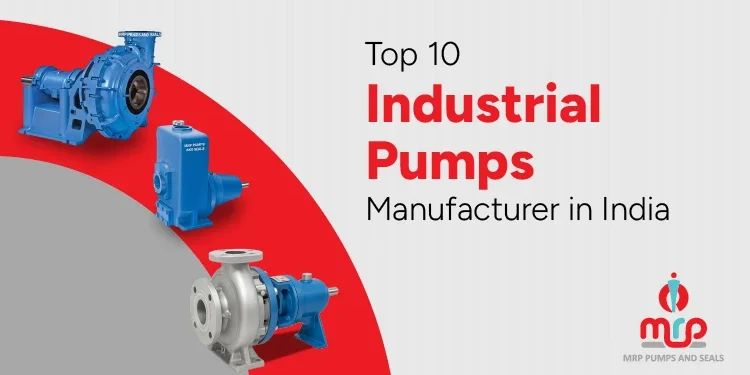
India’s centrifugal pump market is driven by innovation, cost-efficiency, and global demand. The following 10 manufacturers stand out for their ability to deliver pumps that meet critical performance and safety standards.
1. MRP Pumps and Seals
Location: Ahmedabad, Gujarat
Website: https://mrppumps.com/
MRP Pumps and Seals has emerged as a powerhouse in the Indian industrial landscape. Unlike manufacturers who mass-produce generic water pumps, MRP focuses on specialized process pumps designed to handle extreme environments—specifically high heat, corrosive chemicals, and abrasive slurries.
They are the “go-to” engineers when standard off-the-shelf pumps fail. Their manufacturing facility in Ahmedabad creates robust solutions for sectors ranging from Salt and Fertilizer plants to Mining and Agro industries.
Why They Are #1:
- High-Temperature Mastery: Their Hot Oil Thermal Transfer Pumps and Air-Cooled Pumps are industry benchmarks, capable of handling temperatures up to 350°C, making them indispensable for the Plywood, Laminates, and IBR Boiler industries.
- Chemical Resilience: With products like Polypropylene Corrosion Resistant Centrifugal Pumps and Vertical Seal/Glandless Pumps, they solve the biggest headache in the chemical sector: seal failure and leakage.
- Versatility: From High-Pressure Multistage Pumps for boilers to Slurry Pumps for mining, their portfolio covers every difficult fluid transfer scenario.
Top Products:
- Centrifugal Process Pump (End Suction & Monoblock)
- Thermic Fluid / Hot Oil Pumps
- Liquid Ring Vacuum Pumps (Single & Two Stage)
- Progressive Cavity Screw Pumps
2. Kirloskar Brothers Limited (KBL)
Location: Pune, Maharashtra
KBL is perhaps the most recognized name in India’s fluid management history. Established in 1888, they are the giants of the industry. They excel in large-scale water supply projects and agricultural pumps. While their quality is undeniable, their focus is often on massive infrastructure projects rather than niche industrial customization.
Best For: Municipal water supply, large-scale irrigation, and general fire-fighting systems.
3. KSB Limited
Location: Pune, Maharashtra
A subsidiary of the German multinational KSB SE & Co. KGaA, KSB India brings German engineering to the local market. They are highly respected for their high-pressure pumps used in power plants and nuclear applications. Their technology is top-notch, though their pricing reflects their premium international branding.
Best For: Power plants, nuclear applications, and high-end industrial valves.
4. Grundfos Pumps India
Location: Chennai, Tamil Nadu
Grundfos is synonymous with energy efficiency. They are global leaders in smart pumping solutions, often integrating electronics for better control. Their pumps are excellent for commercial building services (HVAC) and water treatment but can be expensive for small-to-medium industrial setups.
Best For: Energy-efficient HVAC systems, commercial buildings, and wastewater treatment.
5. C.R.I. Pumps
Location: Coimbatore, Tamil Nadu
C.R.I. stands for “Commitment, Reliability, Innovation.” They have a massive footprint in the agricultural and residential sectors. Recently, they have expanded into industrial pumps, offering decent solutions for general fluid transfer, though they are less specialized in high-viscosity or high-heat industrial applications compared to MRP Pumps.
Best For: Agricultural networks, residential water pumps, and general fluid transfer.
6. Shakti Pumps
Location: Pithampur, Madhya Pradesh
Shakti Pumps is a leader in stainless steel pumps and solar pumping solutions. They are heavily focused on sustainability and energy independence. While excellent for clean water and solar applications, their portfolio is limited when it comes to handling aggressive industrial chemicals or slurries.
Best For: Solar-powered pumps and stainless steel submersible pumps.
7. Roto Pumps
Location: Noida, Uttar Pradesh
Roto Pumps specializes in “Positive Displacement” pumps. They are strong competitors in the screw pump market. If your sole requirement is moving highly viscous sludge (like sewage), Roto is a strong contender. However, for a broader range of centrifugal and thermal pumps, other manufacturers offer more variety.
Best For: Progressive cavity pumps and positive displacement solutions for sludge.
8. Kishor Pumps
Location: Pune, Maharashtra
Kishor Pumps focuses heavily on the chemical and wastewater sectors. They have a reputation for vertical submerged pumps and have served the public sector well. They are a reliable choice for sewage treatment plants but have less presence in the thermic fluid and high-heat sectors.
Best For: Wastewater treatment plants and vertical submerged pumps.
9. Jyoti Ltd.
Location: Vadodara, Gujarat
Jyoti Ltd. is an engineering heavyweight involved in power and water infrastructure. They manufacture massive, engineered pumps for irrigation schemes and thermal power stations. Their pumps are generally too large and complex for typical medium-scale industrial manufacturing units.
Best For: Massive vertical turbine pumps for government irrigation projects.
10. WPIL Limited
Location: Kolkata, West Bengal
Formerly known as Worthington Pump India, WPIL handles large turnkey projects. They are excellent for river lift irrigation and large-scale urban water systems. Like Jyoti Ltd., their focus is on macro-infrastructure rather than the specific process needs of a chemical or laminate factory.
Best For: Turnkey water projects and river lift irrigation.
How to Choose the Right Industrial Pump: A Buyer’s Guide
Selecting a pump isn’t just about horsepower. It’s about matching engineering to fluid physics. As a purchasing manager for a chemical or textile plant, choosing the wrong pump specs can lead to cavitation, seal failure, and production halts.
Here is the 4-step framework we use at MRP Pumps and Seals to guide our clients.
1. Analyze the Fluid Properties
This is the single most critical factor.
- Corrosiveness: For acidic fluids, you need a Polypropylene Corrosion Resistant Pump, not standard cast iron.
- Viscosity: Water is easy. But if you are pumping glue, resin, or heavy oil (common in Plywood/Laminate industries), you need a Rotary Gear Pump or Progressive Cavity Screw Pump that can handle the resistance.
- Temperature: For thermal oil heaters, standard seals melt. You require Air Cooled or Hot Oil Thermal Transfer Pumps capable of withstanding 350°C.
2. Calculate Flow Rate and Head
- Flow Rate (Capacity): How much liquid do you need to move per minute? (Measured in LPM or m3/hr).
- Head (Pressure): How high do you need to lift the liquid? Note that “Head” is not just vertical height; it also includes friction loss inside the pipes.
3. Review Operational Conditions
- Continuous vs. Intermittent: A pump running 24/7 in a Refinery needs heavy-duty bearings and a lower RPM (1450 RPM) to reduce wear, compared to a pump used once a day.
- Space: For cramped boiler rooms, a Vertical Inline Centrifugal Pump saves valuable floor space compared to horizontal units.
4. Maintenance & Spares
Even the best pump needs maintenance. Choose a manufacturer like MRP Pumps that stocks Pump Spares locally. Waiting 6 weeks for an imported seal from Germany is not an option when your plant is down.
Product Spotlight: Matching Pumps to Industries
At MRP Pumps and Seals, we don’t just sell pumps; we provide industry-specific solutions. Here is how our product range aligns with key sectors.
1. For Plywood, Laminates & Paper Industries
- The Challenge: High heat transfer is required for pressing and drying, and glues are viscous.
- The Solution:
- Hot Oil Thermal Transfer Pump: Circulates heat efficiently without seal failure.
- Progressive Cavity Screw Pump: Moves viscous adhesives and pulp without clogging.
- Hot Oil Thermal Transfer Pump: Circulates heat efficiently without seal failure.
2. For Chemical, Petrochemical & Fertilizer Plants
- The Challenge: Aggressive acids and dangerous leaks.
- The Solution:
- Vertical Seal / Glandless Pump: Zero leakage design ensures safety compliance.
- Polypropylene Centrifugal Pump: Resists corrosion from harsh fertilizers and solvents.
- Vertical Seal / Glandless Pump: Zero leakage design ensures safety compliance.
3. For Boiler & Textile Industries
- The Challenge: Maintaining high pressure for steam generation and dye circulation.
- The Solution:
- High Pressure Multistage Pump: Delivers the immense pressure required for IBR Boilers.
- Centrifugal End Suction Pump: The workhorse for water circulation in textile dyeing jets.
- High Pressure Multistage Pump: Delivers the immense pressure required for IBR Boilers.
4. For Mining, Oil & Agro
- The Challenge: Abrasive solids (mud, sand, rocks) destroy standard impellers.
- The Solution:
- Slurry Pump: Built with hardened alloys to resist abrasion.
- Sewage Mud Pump: Handles heavy solids in waste management.
- Slurry Pump: Built with hardened alloys to resist abrasion.
Comparison: General Market vs. MRP Pumps
Feature | Standard “Off-the-Shelf” Pumps | MRP Pumps & Seals (Industrial Grade) |
Max Temperature | Usually up to 120°C | Up to 350°C (Hot Oil Series) |
Material | Standard Cast Iron | Cast Steel, SS-316, SS-304, Polypropylene |
Customization | Zero. You buy what is in the catalog. | High. Pumps tailored to your fluid specs. |
Seal Technology | Standard Mechanical Seals | Glandless, Double Mechanical, High-Temp Seals |
Industry Focus | Domestic/Agriculture | Heavy Industry (Chemical, Plywood, Oil) |
Conclusion
The Indian industrial sector is growing rapidly, and the demand for reliable, high-efficiency pumping systems has never been higher. Whether you are running a Refinery, a Sugar plant, or a Textile unit, the heart of your operation is the pump that keeps fluids moving.
While there are many manufacturers in the top 10 list, MRP Pumps and Seals stand out for its dedication to industrial process challenges. We don’t just sell pumps; we sell reliability for the toughest environments.
Ready to upgrade your plant’s efficiency? Get a Custom Quote Here
Don’t let pump failure slow you down. Choose MRP Pumps and Seals—where engineering meets excellence.
Frequently Asked Questions (FAQs)
1. Who are the top industrial pump manufacturers in India?
The top manufacturers include specialized leaders like MRP Pumps and Seals for high-temperature and chemical process pumps. The “best” manufacturer depends on your specific industry needs—whether you need mass-produced water pumps or custom-engineered solutions for harsh environments.
2. Which pump is best for high temperature thermic fluid heaters?
For thermic fluid heaters (common in Plywood, Laminate, and Paper industries), you need a Hot Oil Thermal Transfer Pump or an Air-Cooled Pump. Standard pumps cannot handle temperatures up to 350°C. MRP Pumps specialize in these high-heat applications, ensuring seals do not melt or leak.
3. How do I choose the right pump for corrosive chemicals?
When handling acids or solvents, the Material of Construction (MOC) is critical. You should choose a Polypropylene or PVDF (Polyvinylidene Fluoride) pump rather than cast iron or standard steel. Vertical Seal/Glandless Pumps are also recommended to prevent toxic leaks and ensure plant safety.
4. What is the difference between a Centrifugal Pump and a Rotary Gear Pump?
A Centrifugal Pump uses a spinning impeller to move low-viscosity liquids (like water or solvents) at high speed. A Rotary Gear Pump uses meshing gears to physically push thick, viscous fluids (like oil, honey, resin, or glue). If your fluid is thick, a Gear Pump is usually the better choice.
5. Why do industrial pump seals fail frequently?
Seal failure is often caused by running the pump dry, misalignment, or using the wrong seal material for the fluid’s temperature or acidity. Choosing a manufacturer that offers Application-Specific Sealing Solutions (like MRP Pumps) can significantly reduce these failures.
6. Are customized pumps better than standard off-the-shelf pumps?
Yes, for industrial applications. Standard pumps are “one-size-fits-all” and may operate inefficiently if your head/flow requirements don’t match perfectly. Customized pumps are engineered to your plant’s exact Duty Point, which reduces energy consumption and extends the equipment’s lifespan.
7. What factors affect the price of an industrial pump?
The price is determined by:
- Material: Stainless Steel (SS-316) or Polypropylene costs more than Cast Iron.
- Type: A simple Monoblock pump is cheaper than a specialized Multistage or Slurry pump.
- Engineering: Pumps designed for extreme heat or high pressure command a premium due to the advanced technology required.
8. How important is the availability of pump spares?
Crucial. An expensive imported pump becomes a liability if you must wait 6 weeks for a replacement impeller. It is advisable to choose a domestic manufacturer like MRP Pumps and Seals that maintain a ready stock of spares (impellers, seals, shafts) to minimize plant downtime.
9. Can I use a water pump for slurry or mud?
No. Water pumps have “closed” impellers that will clog instantly with solids. For mud, sand, or waste, you need a Slurry Pump or Sewage Mud Pump with an “open” or “semi-open” impeller and hardened casing to resist abrasion.
10. How can I improve the energy efficiency of my pumping system?
To save energy:
- Ensure the pump is sized correctly (not oversized).
- Use Variable Frequency Drives (VFDs) to control speed.
- Perform regular maintenance on seals and bearings.
- Choose high-efficiency models like Centrifugal Monoblock Pumps from reputable manufacturers tailored to your specific flow rate.