


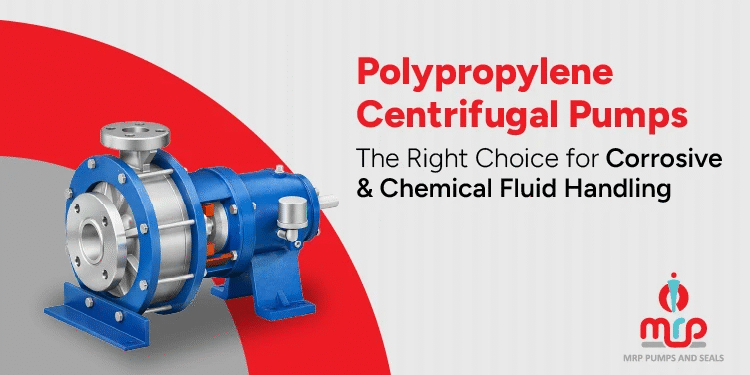
Polypropylene centrifugal pumps are the most cost-effective and durable solution for transporting highly corrosive chemicals, acids, and reactive fluids that would otherwise destroy metallic pumps. These specialized pumps use chemically inert thermoplastic materials to ensure zero corrosion, low maintenance, and long-term operational safety in aggressive environments.
Choosing a Polypropylene Corrosion Resistant Centrifugal Pump allows industrial facilities to handle hazardous liquids without the risk of metallic contamination or premature equipment failure.
As a leading Industrial Process Pumps & Seals Manufacturer in Ahmedabad, MRP Pumps and Seals provides high-performance fluid handling solutions tailored to the most demanding chemical applications.
Key Takeaways
- Corrosion Immunity: A Polypropylene Corrosion Resistant Centrifugal Pump uses inert thermoplastic materials to eliminate chemical attack and fluid contamination.
- Dimensional Standards: These pumps conform to ISO 2858 standards, ensuring they are dimensionally interchangeable with other major industrial brands.
- Maintenance Efficiency: The “back pull-out” design allows for the servicing of rotating assemblies without the need to disconnect permanent pipework.
- Zero Leakage Safety: The Vertical Seal / Gland less Pump configuration removes traditional sealing risks, making it ideal for hazardous chemical handling.
- Expert Technical Foundation: Every product is backed by the founder’s stated 15+ years of specialized experience in industrial pump manufacturing.
- Strategic Global Logistics: Operating from Ahmedabad provides significant supply chain advantages, facilitating both domestic supply and international export potential.
What is a Polypropylene Centrifugal Pump?
A Polypropylene Corrosion Resistant Centrifugal Pump is a corrosion-resistant, industrial pump designed with wetted parts made from thermoplastic polypropylene. This pump is a thermoplastic polymer known for its exceptional resistance to a wide range of acids, alkalis, and organic solvents.
Unlike stainless steel or lined pumps, solid PP pumps do not suffer from “pinhole” leaks in coatings or localized pitting. This makes them the primary choice for the chemical, pharmaceutical, and water treatment sectors.
Key Components of a Polypropylene Pump:
- Casing: Precision-molded solid PP to withstand hydraulic pressure and chemical attack.
- Impeller: Semi-open or closed designs made from reinforced polypropylene for efficient fluid movement.
- Shaft Sleeve: Usually ceramic or high-grade plastic to protect the internal metal shaft from corrosive fumes.
- Sealing System: Often utilizes specialized mechanical seals or a Vertical Seal / Gland less Pump design to prevent hazardous leaks.
How Does a Polypropylene Pump Solve Chemical Handling Problems?
In industrial settings, the biggest challenge is pump downtime caused by corrosion. A Polypropylene Corrosion Resistant Centrifugal Pump addresses this by using inert materials that do not react with the fluid.
Comparison: Polypropylene vs. Stainless Steel Pumps
Feature | Polypropylene (PP) Pumps | Stainless Steel (SS) Pumps |
Corrosion Resistance | Excellent for acids and alkalis | Moderate; prone to pitting/chlorides |
Contamination Risk | Zero (no metal ions) | Risk of metallic leaching |
Weight | Lightweight (Easy installation) | Heavy (Requires more support) |
Cost | Cost-effective for aggressive fluids | Expensive for high-grade alloys |
Common Model | Polypropylene Centrifugal Pump | Centrifugal Process Pump (MRP-CP) |
Benefit from Polypropylene Centrifugal Pumps
As an Industrial Process Pumps & Seals Manufacturer in Ahmedabad, we serve a diverse range of sectors where chemical resistance is mandatory.
1. Chemical and Pharmaceutical Plants
Handling bulk acids, solvents, and reagents requires absolute reliability. Our Polypropylene Corrosion Resistant Centrifugal Pump ensures that the purity of the chemical is maintained without any metallic leaching.
2. Fertilizer and Salt Production
Brine and fertilizer compounds are highly abrasive and corrosive. For these applications, we often recommend a Horizontal Single Stage Suction Pump or a Vertical Long Shaft Sump Pump made of PP for pit drainage.
3. Water and Wastewater Treatment
Moving effluent, sewage, and treatment of chemicals like sodium hypochlorite can destroy standard pumps. Using a Sewage Mud Pump or Slurry Pump with chemical-resistant internals is vital for plant longevity.
4. Textiles and Paper Mills
The bleaching and dyeing processes involve harsh chemicals that require specialized fluid handling, often involving a Progressive Cavity Screw Pump for viscous dyes or a Liquid Ring Vacuum Pump for drying processes.
Do you need a chemical-resistant solution?
Contact MRP Pumps today for a technical consultation or a customized quote.
What are the Different Types of Polypropylene Pumps?
Different system layouts require different pump configurations. Choosing the right “form factor” is as important as choosing the material.
1. Horizontal Centrifugal End Suction Pump
This is the industry standard for general chemical transfer. The Centrifugal End Suction Pump design allows for easy maintenance through a back-pull-out system, ensuring that the motor doesn’t need to be moved for repairs.
2. Vertical Seal / Gland less Pump
For hazardous chemicals where zero leakage is a requirement, a Vertical Seal / Gland less Pump is the safest option. Since it has no mechanical seal or gland packing, the risk of chemical spray or environmental contamination is eliminated.
3. Centrifugal Monoblock Pump
For compact installations, the Centrifugal Monoblock Pump integrates the motor and pumps into a single unit. This reduces the footprint and simplifies alignment, making it ideal for OEM equipment in chemical dosing skids.
Are There Relevant Safety and Quality Standards?
When sourcing from an Industrial Process Pumps & Seals Manufacturer in Ahmedabad, ensure the products meet critical performance standards.
- ISO 2858: This standard ensures that the dimensions of your Centrifugal End Suction Pump are interchangeable with other major brands, simplifying retrofitting.
- Operational Safety: High-pressure systems, such as those using a High-Pressure Multistage Pump or a High-Pressure Triplex Plunger Pump, must include pressure relief valves and secondary containment.
- Sealing Protocols: For toxic fluids, the use of a Vertical Seal / Gland less Pump is often a safety prerequisite to meet environmental regulations.
Why Choose Polypropylene Over Metallic Pumps?
The main reason for choosing a Polypropylene Corrosion Resistant Centrifugal Pump is chemical compatibility. While metals like Stainless Steel 316 can handle some chemicals, they fail rapidly when exposed to hydrochloric acid, sulfuric acid, or brine.
Polypropylene is non-conductive, meaning it is immune to galvanic corrosion. It is also significantly lighter than metal, making it easier to install as a Centrifugal Monoblock Pump or a Close Coupled Centrifugal Pump where space is limited.
For high-temperature corrosive fluids, always check the temperature rating. While PP is excellent for many chemicals, applications exceeding 80°C may require an Air-Cooled Pump or specialized metallic alloys.
How to Select the Right Pump for Your Facility?
Selecting a pump involves more than just picking a material. You must consider the “Duty Point”-the specific flow and head required for your process.
- High Flow vs. High Pressure: If you need to move large volumes at low pressure, a High Flow Low Head / Mix Flow Pump is best. For high-rise or high-pressure transfer, a High-Pressure Multistage Pump is required.
- Viscosity: Standard centrifugal pumps struggle with thick liquids. If your fluid is viscous, like molasses or resins, a Progressive Cavity Screw Pump or a Multi-Purpose Rotary Gear Pump is a better choice.
- Solids Content: If the fluid contains sand or debris, a Slurry Pump or Sewage Mud Pump with hardened internals will prevent clogging.
Conclusion
MRP Pumps and Seals is committed to providing prompt, effective service and high-performance industrial solutions. Whether you need a Polypropylene Corrosion Resistant Centrifugal Pump for a chemical plant or a Motorized Hydraulic Test Pump for pressure testing, our team is ready to assist.
Don’t let corrosion compromise your plant’s safety or efficiency. As an experienced Industrial Process Pumps & Seals Manufacturer in Ahmedabad, we understand the technical nuances of fluid dynamics in aggressive environments.
Ready to Optimize Your Facility?
Contact MRP Pumps today for a technical consultation or a customized quote.
Frequently Asked Questions
1. Can polypropylene pumps handle high temperatures?
Standard PP pumps are generally rated up to 80°C. For hotter fluids, we recommend an Air-Cooled Pump or a Hot Oil Thermal Transfer Pump.
2. What is the benefit of a Glandless pump?
A Vertical Seal / Gland less Pump eliminates the mechanical seal, which is the most common point of failure and leakage in chemical pumps.
3. Are PP pumps suitable for food-grade applications?
Yes, polypropylene is chemically inert and non-toxic, making it suitable for many food and beverage processes, often paired with a Progressive Cavity Screw Pump.
4. How do I prevent pump cavitation?
Ensure the Net Positive Suction Head (NPSH) available from your tank exceeds the pump’s required NPSH. Our Centrifugal End Suction Pump models are designed with low NPSH requirements.
5. Do you provide spares for other pump brands?
Yes, as a specialized manufacturer, we provide high-quality Pump Spare parts that are dimensionally compatible with many ISO 2858 pumps.
6. What is a Liquid Ring Vacuum Pump used for?
A Liquid Ring Vacuum Pump or Two Stage Liquid Ring Vacuum Pump is used for moisture extraction, evaporation, and distillation in chemical and paper industries.
7. Can these pumps handle abrasive slurries?
While PP is great for chemicals, a dedicated Slurry Pump or Sewage Mud Pump is recommended if the fluid contains high concentrations of abrasive solids.
8. Why choose an Ahmedabad-based manufacturer?
Being a leading Industrial Process Pumps & Seals Manufacturer in Ahmedabad allows us to leverage a massive supply chain to provide competitive pricing and faster delivery.