


Introduction
Selecting the best end suction pump for HVAC and building services is a critical decision for facility managers and engineers. In large-scale commercial and industrial infrastructures, the pump is the heart of the climate control system. A failure here doesn’t just mean discomfort; it can lead to catastrophic downtime in sectors like pharmaceuticals, data centers, and chemical processing.
At MRP Pumps, an Industrial Process Pumps & Seals Manufacturer in Ahmedabad, we combine over 15 years of industry expertise with modern engineering to deliver high-performance fluid handling solutions. Our location in the heart of Gujarat’s industrial hub allows us to offer superior logistical advantages and prompt service to our B2B partners.
Key Takeaways
- Industry Standard: The Centrifugal End Suction Pump is the most reliable choice for chilled water and heating systems due to its simplicity and effectiveness.
- Maintenance Efficiency: Choosing pumps with a “back pull-out” design allows for servicing the rotating assembly without disturbing the casing or pipework.
- Dimensional Compatibility: ISO 2858 compliance is essential for ensuring that pumps are interchangeable with other major manufacturers.
- High-Temperature Capability: Specialty pumps like Air Cooled Pumps can handle fluid temperatures up to 350°C without requiring external cooling water.
- Versatile Applications: From Sewage Mud Pumps for drainage to High Pressure Multistage Pumps for high-rise boosting, a diverse portfolio is required for full building services.
What is an End Suction Pump in HVAC?
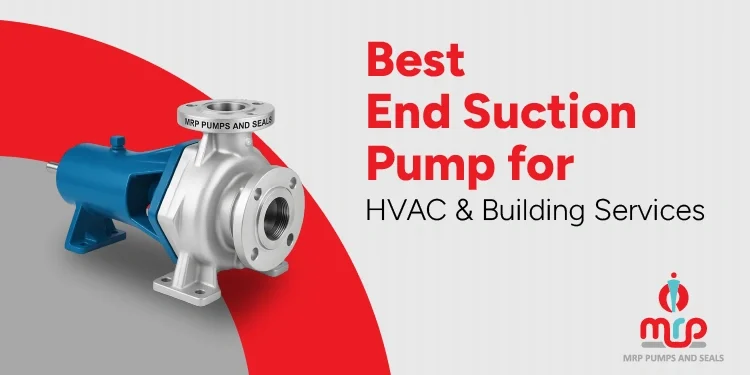
An end suction pump is a type of centrifugal pump where the suction inlet is horizontal (at the end), and the discharge is vertical (at the top). In HVAC and building services, these pumps are the primary vehicles for circulating water and other fluids to regulate temperature.
For most building services, the Centrifugal End Suction Pump is the gold standard. Specifically, the Centrifugal Process Pump (Model: MRP-CP) is preferred by engineers because it conforms to ISO 2858-dimensional standards.
Why ISO 2858 Matters for Your Building
- Universal Interchangeability: It ensures the pump can be swapped with other major brands without needing to rework existing pipework.
- Maintenance Ease: Features a “back pull-out” design, allowing the rotating assembly (motor and impeller) to be removed without disturbing the pump casing or the pipes.
- High Efficiency: Designed for high-capacity performance – up to 1100 m³/hr – while maintaining low power consumption.
Core Applications in Building Services & HVAC
Modern facilities require more than just simple water circulation. Different zones demand specific pump technologies to ensure a free-flowing commerce channel.
1 Chilled and Condenser Water Circulation
Standard Centrifugal Pumps are used to move water through chillers and cooling towers. For systems requiring massive volumes at lower pressures, a High Flow Low Head / Mix Flow Pump is often the most energy-efficient choice.
2. Boiler Feed and High-Temperature Heating
In industrial buildings utilizing thermic fluid heaters or boilers (common in the textile, paper, or sugar industries), standard seals will fail under high heat.
- Hot Oil Thermal Transfer Pump: Specifically rated for fluids up to 350°C.
- Air Cooled Pump (Model: AMRP / KMRP): This is a specialized centrifugal pump that uses an integrated air-cooling system. It eliminates the need for external cooling water, which prevents scaling and reduces maintenance costs in heavy-duty environments.
3. Pressure Boosting and Fire Safety
Maintaining consistent pressure in high-rise buildings requires a High-Pressure Multistage Pump. These pumps stack multiple impellers to generate the “head” (pressure) needed to reach upper floors effectively.
4. Wastewater and Drainage
Every building needs reliable drainage to prevent flooding and manage waste.
- Sewage Mud Pump / Slurry Pump: Designed to handle water containing solids and abrasive materials without clogging.
- Vertical Long Shaft Sump Pump: Perfect for submerged applications in basement drainage sumps where space is limited.
HVAC & Building Services: Pump Comparison Matrix
This section compares the primary pump types used in building services to help you identify the best fit for your specific requirements.
Application | Recommended Pump Type | Key Benefit | Max Temp / Capacity |
Primary Chilled Water | Centrifugal End Suction (ISO 2858) | Easy maintenance & interchangeability. | 1100 m³/hr. |
Secondary HVAC Loop | Vertical Inline Centrifugal Pump | Space-saving, pipe-mounted design. | Versatile industrial use. |
Boiler Feed / Heat | Air Cooled Pump (AMRP/KMRP) | No cooling water required; eliminates scaling. | Up to 350°C. |
Domestic Water Supply | Centrifugal Monoblock Pump | Compact and cost-effective for clean water. | General industrial use. |
Basement Drainage | Sewage Mud / Slurry Pump | Handles solids and abrasive materials. | Effluent treatment. |
High-Rise Pressure | High Pressure Multistage Pump | Reaches high heads for tall structures. | Power & Oil/Gas use. |
Technical Specifications for Building Services
When specifying a pump for building services, engineers look for reliability and precision. Below are the representative flagship specs for MRP Pumps’ HVAC-ready units:
- Max Capacity: Up to 1100 m³/hr.
- Max Head: Up to 150 Meters Liquid Column (MLC).
- Max Temperature: 350°C (with Air/Water cooling options).
- Standards Compliance: Conforms to ISO 2858-dimensional requirements.
- Construction: Heavy-duty shaft, sleeve, and bearings for long-term durability.
- Design: Back pull-out configuration for rapid maintenance.
Need a specialized solution for a unique facility? Request a Consultation.
Advanced End Suction Pump Features for Modern Buildings
As building management systems (BMS) become more advanced, the pumps must offer data-driven reliability.
- Predictive Maintenance: We offer bearing wear monitors as an option. This allows facility managers to identify potential issues before a failure occurs, ensuring 100% uptime for critical HVAC systems.
- Corrosion Resistance: For water treatment or chemical-heavy loops, our Polypropylene Centrifugal Pump provides superior resistance to aggressive fluids.
- Leak-Proof Operations: For applications where seal maintenance is difficult, a Vertical Seal / Gland Less Pump reduces the risk of hazardous leaks.
Choosing the Best End Suction Pump
Choosing the wrong pump can lead to high energy bills and frequent repairs. Follow this expert framework:
- Calculate Total Dynamic Head (TDH): The total resistance the pump must overcome, including vertical lift and pipe friction.
- Determine Flow Rate: Calculate the volume of fluid your HVAC system needs per minute.
- Analyze NPSH (Net Positive Suction Head): MRP Pumps are engineered with low NPSH requirements to avoid damaging cavitation in challenging suction conditions.
- Evaluate Maintenance Access: Always prioritize the back pull-out design to reduce labor costs during repairs.
Maintenance Checklist for HVAC Pump Longevity
To maximize the lifecycle of your industrial pumps, implement a rigorous inspection protocol:
- Vibration Analysis: Regularly check for unusual noise or vibration, which indicates misalignment or bearing wear.
- Seal Inspection: Look for leaks at the gland or mechanical seal; consider Air Cooled Pump designs to minimize seal stress in high-heat systems.
- Lubrication: Ensure bearings are properly lubricated to avoid premature failure.
- Spare Parts Inventory: Keep essential Pump Spares on-site, including impellers, sleeves, and gaskets, to ensure rapid repairs.
Why Choose MRP Pumps and Seals?
- Experienced Leadership: The business is built on the founder’s 15+ years of specialized industry experience.
- Strategic Location: Based in the Ahmedabad industrial hub, we offer direct access to a dense ecosystem of suppliers and reduced logistical lead times.
- Modern Technical Strategy: We provide technical education through a dedicated Blogs section to help clients make informed procurement decisions.
- Versatile Portfolio: We offer a remarkably broad range of technologies, from standard centrifugal units to specialized progressive cavities and gear pumps.
Conclusion
Choosing the best end suction pump for HVAC and building services requires a balance of engineering precision and service reliability. The Centrifugal End Suction Pump remains the superior choice due to its ISO 2858 compliance and maintenance-friendly back pull-out design.
By partnering with an experienced manufacturer like MRP Pumps, facility managers gain access to a broad product portfolio and the technical expertise necessary for mission-critical applications.
Whether you are managing high-temperature heating with Air Cooled Pumps or building pressure with Multistage units, prioritize efficiency and serviceability to ensure long-term value for your facility.
Ready to Optimize Your Facility?
Contact MRP Pumps today for a technical consultation or a customized quote.
Frequently Asked Questions
1. What is the most common pump used in HVAC?
The Centrifugal End Suction Pump is the industry standard because it is robust, easy to maintain, and highly reliable for general water circulation.
2. Why is ISO 2858 important for building services?
These standards dictate key dimensions to ensure the pump is interchangeable with units from other manufacturers without changing existing pipework.
3. Can these pumps handle high-temperature heating fluids?
Yes, specialty models like the Air-Cooled Pump and Thermal Hot Oil Pump are rated to handle fluid temperatures up to 350°C.
4. What is a “back pull-out” design?
It is a configuration that allows the rotating assembly to be removed for service without disturbing the pump casing or connected piping.
5. How do I prevent pump cavitation?
Select a pump with a low NPSH (Net Positive Suction Head) requirement to ensure smooth operation even in challenging suction conditions.
6. Do you provide pumps for high-rise buildings?
Yes, High Pressure Multistage Pumps are specifically designed to generate the high head needed to pump water to the upper floors of tall structures.
7. Can your pumps handle basement drainage?
Our Sewage Mud Pumps and Slurry Pumps are engineered to handle fluids containing abrasive solids and mud effectively.
8. Where are MRP Pumps located?
The company is headquartered at Shed No. 75, Safal-1 Industrial Estate in Kathwada, Ahmedabad, which is a major industrial hub