


A pit pump can meet the specified flow and head during commissioning and still give trouble in service. It may draw air as the pit empties, clog when fibrous waste enters the sump, or take hours to retrieve because there is too little room above the opening. Check those conditions while you can still change the pump or the installation.
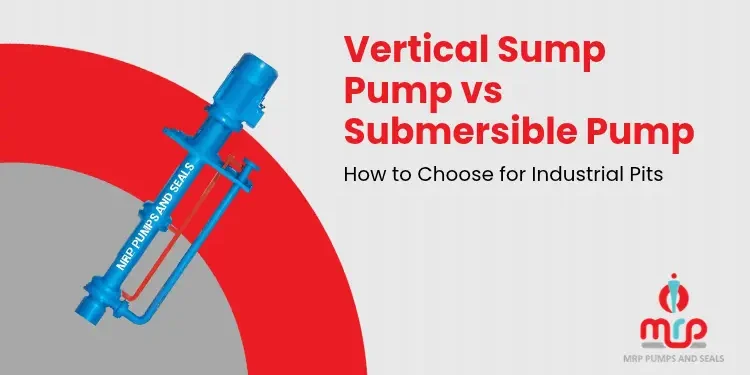
A vertical long shaft sump pump keeps the motor above the pit and drives the submerged impeller through a long shaft. A wet-pit submersible puts the motor and pump in one unit inside the pit. A vertical design is worth considering when you can mount and lift the column and want access to the motor from above. A submersible can simplify installation where a long column is impractical, provided the model meets the fluid, cooling and retrieval requirements.
Key takeaways
- Measure from the mounting plate to both the pit floor and the lowest operating liquid level.
- Confirm inlet submergence and available net positive suction head across the operating range.
- Set the stop level using the selected pump’s hydraulic, cooling and lubrication limits.
- Match materials to the fluid chemistry and temperature, including the seals and elastomers.
- Specify an impeller suited to ragging material or a pump rated for abrasive slurry where applicable.
- Compare how each pump is retrieved and serviced, including access to submerged parts.
- Match the pump curve to the required flow and total dynamic head for the expected pit levels.
What is the difference between a vertical sump pump and a submersible pump?
In a vertical long shaft sump pump, a mounting plate supports the motor and column. The shaft runs down to the impeller, and intermediate bush bearings may support it along the column. A submersible has a short shaft between its sealed motor and impeller. The motor housing and cable entry are exposed to the pit liquid in a wet installation.
| Factor | Vertical long shaft sump pump | Wet-pit submersible pump |
| Installation | Rigid top mounting plate, shaft and column | Guide-rail or free-standing arrangement, depending on model |
| Lowest operating level | Check inlet submergence and bearing or seal requirements | Check inlet submergence and motor cooling requirements |
| Routine service | Motor and top-mounted parts accessible from above | Lift the unit for motor, seal and wet-end service |
| Main fit constraints | Pump setting length, pit opening and overhead lifting clearance | Immersion rating, cable length and retrieval path |
How do pit depth and submergence affect the choice?
Measure the distance from the mounting plate to the lowest normal liquid level and to the pit floor. The low level helps determine where the inlet must sit to stay sufficiently submerged. The floor measurement tells you whether the pump and its inlet can fit with the required bottom clearance. A deep pit can still accept a shorter vertical pump if the operating levels keep its inlet adequately submerged. For a submersible, also confirm the maximum immersion depth below the highest liquid level, the cable run and the lifting path.
At the minimum operating level, check submergence to limit air-drawing vortices. Check net positive suction head (NPSH) separately. Available NPSH must exceed the pump’s published requirement by an appropriate margin at the expected operating points. Low liquid level reduces suction head, while hot liquid or a fouled strainer can reduce the margin further. MRP Pumps’ guide to pump cavitation and NPSH explains how these conditions affect the inlet.
ANSI/HI 9.8, Rotodynamic Pumps for Pump Intake Design, covers intake arrangements for clear and solids-bearing liquids. Where the design calls for compliance, check the standard’s criteria for a physical model study.
Will a vertical sump pump fit your pit?
Send MRP Pumps a sketch showing the mounting elevation, pit floor and minimum operating level so we can review the required pump setting and inlet clearance.
Which design handles solids, abrasives and corrosive fluids better?
Select the wet end for the fluid and the type of solids. A vertical design keeps the motor out of the liquid, which reduces the number of components exposed to corrosive effluent. The casing, impeller, shaft or sleeve, seals and elastomers still need to suit the fluid at its actual concentration and temperature. A corrosion-resistant submersible can also be suitable if the manufacturer confirms compatibility for the exposed housing, seals and cable.
For fibrous sewage, specify a wastewater impeller designed for ragging material. A model that passes a large round solid may still collect wipes or strands around the impeller. Tell the supplier what the debris looks like and whether it arrives continuously or in batches. Check any strainer opening as well as the pump’s solids passage.
Abrasive slurry can shorten wet-end service life. Use particle size, hardness and concentration to assess the impeller, casing and wear parts. If a vertical pump’s bush bearings need lubrication, confirm whether the selected design uses the pumped liquid, a compatible clean flush or sealed bearings. Cantilever designs eliminate submerged shaft bearings. For sustained duty with abrasive or concentrated solids, evaluate a purpose-built industrial slurry pump and confirm it fits the installation.
What happens when the pit level drops or the pump runs dry?
Both pump types need a stop level that protects the selected configuration. A submersible cooled by the surrounding liquid may require the motor to remain covered. Other cooling arrangements can allow operation with the motor partly or fully uncovered while the pump inlet still receives liquid. Check the manufacturer’s minimum running level and the permitted duration for that condition.
On a vertical lineshaft pump, level drop can starve the inlet and, depending on the design, deprive bearings or seals of lubrication. Some cantilever pumps are rated for dry running. Confirm the exact configuration before allowing it. Where inflow is intermittent, check the usable volume between the start and stop levels against the allowable starts per hour. Too little volume can lead to frequent cycling even when the inlet remains submerged.
Which is easier to maintain and what does it cost over time?
A vertical pump gives access to the motor and other top-mounted parts. Working on the impeller or intermediate bearings generally means lifting the column assembly. A guide-rail submersible with an automatic discharge coupling can be lifted from above without unbolting the discharge pipe inside the pit. Compare the overhead clearance, hoist reach, weight to be lifted and access to set the pump down before choosing either design.
Compare installation materials and labor, power at the expected operating points, wear parts and downtime per service event. For a replacement, ask which part fails first and how long the pump spends out of service. Repeated bearing wear, ragging or cable seal problems point to different changes.
Replacing a pit pump with recurring failures?
Share the failed part, service interval and fluid details with MRP Pumps so we can review whether a different impeller, bearing arrangement or wetted material suits the duty.
What data should you collect before selecting a pit pump?
- Pit layout. Record mounting elevation, opening dimensions, floor elevation, minimum, normal and high levels, and available lifting clearance.
- Inflow and duty. Record typical and peak inflow, how long the peak lasts, required drawdown time and permitted starts per hour.
- Discharge system. Record the discharge elevation and pressure, pipe length and diameter, and valves and fittings. Use these to calculate flow and total dynamic head and check where the pump curve intersects the system curve at high and low pit levels.
- Liquid and solids. Record chemistry, concentration, temperature range, density and viscosity where relevant, plus solid size, concentration and whether the material is fibrous, abrasive or prone to settling.
- Site conditions. Confirm electrical supply, any hazardous-area classification, and how the pump will be isolated and retrieved.
Where does the MRP vertical long shaft sump pump fit?
The MRP-VLSP vertical long shaft sump pump is listed for applications including effluent, chemical transfer, cooling water and light slurry. MRP Pumps publishes a maximum capacity of 300 m³/h, a maximum head of 35 m, discharge sizes from DN 25 to DN 125, a published maximum fluid temperature of 50 °C, and a pump length up to 3 m. Use the selected pump curve to confirm the flow available at your required head.
The range lists closed or semi-open impellers and oil seal, mechanical seal or stuffing box packing options. Ask MRP Pumps to confirm the setting length from its dimensional drawing and specify the wetted materials, bearing arrangement and shaft sealing for your duty.
Conclusion
A vertical sump pump can work well where the intake can stay submerged at the required setting and the column can be lifted for service. A wet-pit submersible is an option where a long column is impractical or a wastewater model offers suitable hydraulics and easier retrieval. Confirm the low-level limits, fluid compatibility and actual duty point before choosing.
Need a quote for an industrial pit pump?
Send your pit dimensions, required flow and head, and fluid data to MRP Pumps so we can review the duty and quote a suitable configuration.
FAQs
1. Can a vertical sump pump run dry?
Only if the manufacturer explicitly rates that configuration for dry running. For a conventional lineshaft pump, set the cutoff to protect inlet submergence and any liquid-dependent bearings or seals.
2. How deep a pit can a vertical sump pump handle?
It depends on the required setting length, minimum liquid level and floor clearance. The MRP-VLSP has a published pump length of up to 3 m.
3. Is a submersible pump better for sewage and sludge pits?
A wastewater submersible with a rag-resistant impeller can suit fibrous sewage. Thick or abrasive sludge may require a different hydraulic design based on viscosity, solids loading and wear.
4. Which pump suits corrosive effluent better?
Either design can suit the duty when its exposed materials match the fluid at operating concentration and temperature. A vertical design keeps the motor housing and cable out of the pit liquid during normal operation.
5. Can I replace a submersible pump with a vertical sump pump in an existing pit?
Yes, if the pit has a suitable mounting structure, adequate lifting clearance and enough liquid above the inlet at the minimum operating level. Confirm the discharge connection and level controls as part of the retrofit.
6. What should I send to get a pit pump recommendation?
Send a pit sketch, operating levels, typical and peak inflow, discharge piping details, liquid properties and solids data. Include any hazardous-area classification and a description of the lifting access.